

Modular UPS for Data Centers
- Published 10 Jun, 2026
- 6 min read
Modular UPS architecture helps data centers add capacity, build redundancy and maintain critical power protection as IT load grows.
Why modular architecture matters
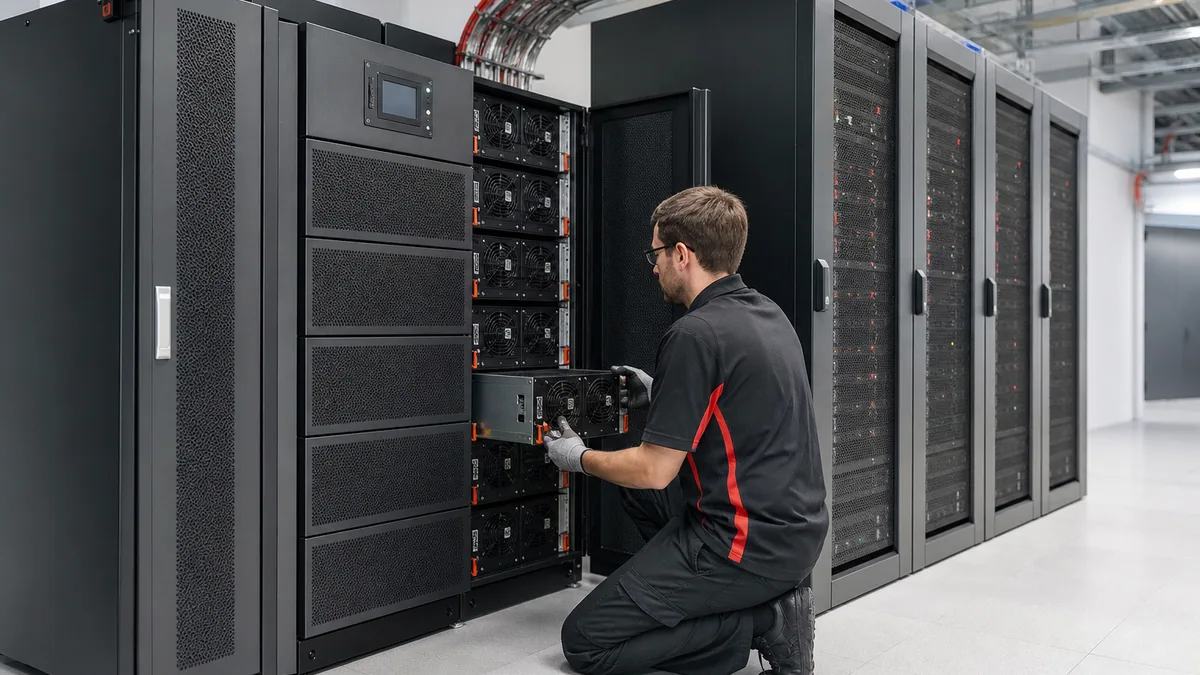
Data center load rarely stays fixed. Modular UPS systems allow capacity modules to be added as server load increases, helping avoid oversized systems at the start and capacity shortages later.
Redundancy and serviceability
With suitable design, modular UPS systems can support N+1 redundancy and easier module-level service. This helps reduce downtime risk for server rooms, network infrastructure and edge data centers.
Selection checklist
- Current IT load and projected load
- Rack/server room growth plan
- Required redundancy level
- Battery backup time
- Bypass and maintenance design
- Monitoring and alarm integration
FAQs
Is modular UPS only for large data centers?
No. It is also useful for server rooms and edge sites that need scalable redundancy.
Can modular UPS reduce downtime?
It can improve maintainability and redundancy when designed correctly, reducing single points of failure.
What does N+1 redundancy mean in a modular UPS?
N+1 provides one additional power module beyond the capacity needed for the load, allowing one module to fail or be serviced without losing rated support.
Can a modular UPS be expanded without shutting down the data center?
Many systems support hot-scalable modules, but the frame, bypass, battery system and downstream distribution must all be designed for expansion.
How is battery capacity selected for a data-center UPS?
Use critical kW, required runtime, inverter efficiency, DC voltage, battery aging, temperature and generator start time to engineer the battery bank.
Related Products and Solutions
Related Location Solutions
Related Articles
Need help choosing the right solution?
Contact Adroit Power Systems for stabilizers, UPS systems, power quality correction, solar UPS and industrial backup power guidance.