

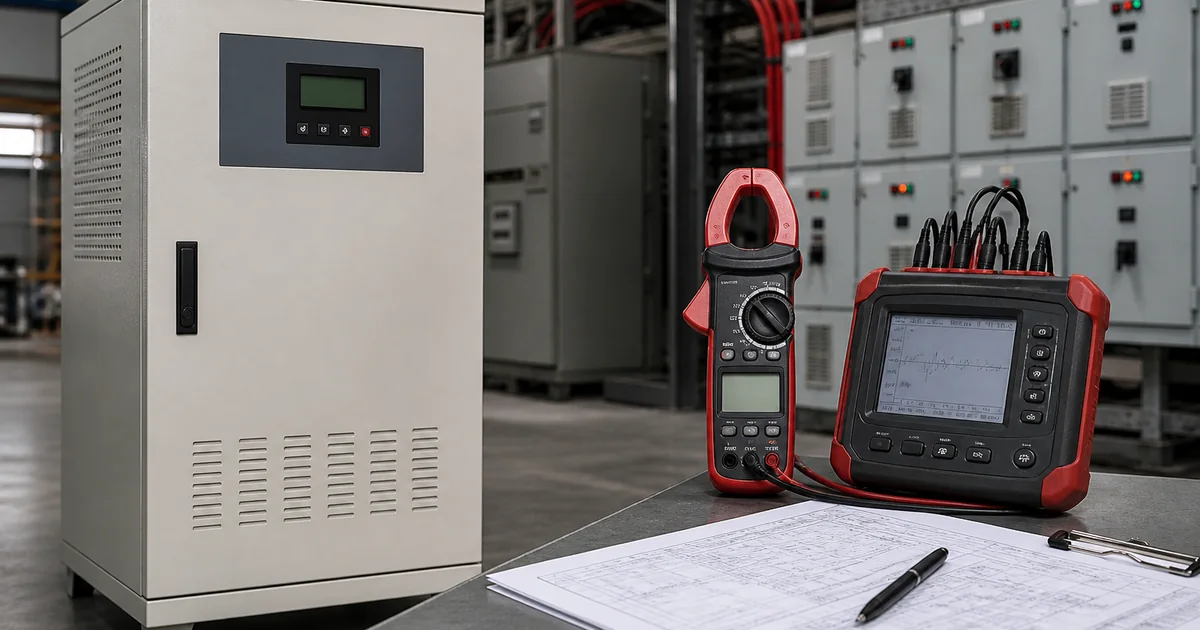
Single Phase vs Three Phase Servo Stabilizer: Which One Do You Need?
- Published 10 Aug, 2026
- 8 min read
The correct stabilizer phase type must match both the incoming supply and the protected load. Homes and small shops often use single phase, while machinery and larger buildings commonly require three phase.
What is a single phase servo stabilizer?
A single-phase servo stabilizer senses and corrects voltage on one alternating-current phase. It is commonly evaluated for homes, small offices, shops, laboratories and individual equipment that operates from a single-phase supply. The stabilizer rating, input range and output accuracy still need to match the connected load; single phase does not mean that every small stabilizer is interchangeable.
Typical loads include lighting, computers, household equipment, small commercial electronics and selected machines. Buyers should identify which circuits need regulation instead of placing the full building behind a stabilizer without load data. Dedicated protection can sometimes be more practical for sensitive or high-value equipment.
What is a three phase servo stabilizer?
A three-phase servo stabilizer regulates a three-phase supply used by larger motors, lifts, CNC machines, textile equipment, pumps, HVAC systems and industrial distribution. It monitors the three phases and corrects voltage according to its design. Some applications need independent phase correction when incoming phase voltages are uneven, while others can use balanced correction.
The load schedule should show motor ratings, electronic controls, power factor, starting method and whether all equipment starts together. Phase imbalance, neutral arrangement and bypass requirements should be discussed during selection because they affect configuration and installation.
Key differences in applications
The primary difference is the electrical system served. A single-phase stabilizer has one regulated phase and neutral path. A three-phase model handles three phase conductors and may include neutral depending on the network. Capacity, protection and cable sizes are therefore not directly comparable even when the numeric kVA looks similar.
Single-phase units are generally associated with lower connected loads. Three-phase equipment is common where power demand and motor use are higher. Correction range and cooling must still be selected from site conditions, so phase type is only one part of the decision.
Which one is suitable for homes and shops?
A home or small shop with a single-phase utility connection normally requires a single-phase stabilizer for selected circuits. A larger commercial property may receive a three-phase supply even though many internal loads are single phase. In that case, engineers must review load distribution and whether regulation is required centrally or on particular circuits.
Do not connect a three-phase stabilizer simply because a building has three phases. The protected load, balance between phases, wiring arrangement and desired continuity need to be known. A qualified electrician should verify the supply before procurement.
Which one is suitable for industries?
Industrial motors, CNC machines, compressors and production lines are often three phase, making a three-phase stabilizer the usual starting point. However, control rooms and individual electronic loads may remain single phase. A plant can therefore use both types at different points, based on criticality and distribution architecture.
For central regulation, consider simultaneous demand, motor starting and future expansion. For machine-level regulation, use the machine manufacturer data and measured terminal voltage. Industries should also distinguish voltage variation from harmonics, poor power factor and outages because those conditions require other solutions.
Selection checklist
Confirm the utility supply, equipment input, connected current or kVA, power factor, minimum and maximum measured voltage, duty cycle and installation environment. Record whether the load contains motors or drives and whether bypass is needed during service. These details allow the phase type and rating to be verified together.
Final selection should be reviewed against cable and breaker ratings. Adroit can assess home, shop, commercial and industrial requirements after receiving load and voltage information. This avoids assumptions based solely on building category.
Before ordering, compare the proposed input range with actual site readings and confirm continuous load, ambient temperature and cooling assumptions. The quotation should state phase arrangement, capacity, output accuracy, protections, bypass and installation responsibilities. For three-phase loads, ask how the unit responds to imbalance and whether a neutral is required. For single-phase loads in a larger building, identify the exact protected circuit and peak demand. This review prevents a correct phase choice from being paired with an unsuitable rating or voltage range.
- Match the stabilizer to the actual supply phase
- List protected loads and starting current
- Measure voltage on every relevant phase
- Confirm neutral and earthing arrangement
- Allow a justified margin for future load
FAQs
What is the difference between single phase and three phase stabilizer?
A single-phase stabilizer regulates one phase, while a three-phase stabilizer regulates a three-phase supply used by larger building and industrial loads.
Can I use a three phase stabilizer for home?
Only when the home has a suitable three-phase supply and the protected distribution is designed for it. Most single-phase homes require a single-phase model.
Which stabilizer is suitable for commercial loads?
It depends on the building supply and protected equipment. Small shops may be single phase; larger HVAC, lift and facility loads are often three phase.
Is three phase stabilizer required for CNC machines?
Most industrial CNC machines are three phase, but the machine nameplate and electrical drawings must confirm voltage, phase and capacity.
How do I confirm the right phase type?
Check the incoming supply, equipment nameplate, distribution diagram and measured currents with a qualified electrician or application engineer.
Related Products and Solutions
Related Articles
Need help choosing the right solution?
Contact Adroit Power Systems for stabilizers, UPS systems, power quality correction, solar UPS and industrial backup power guidance.