

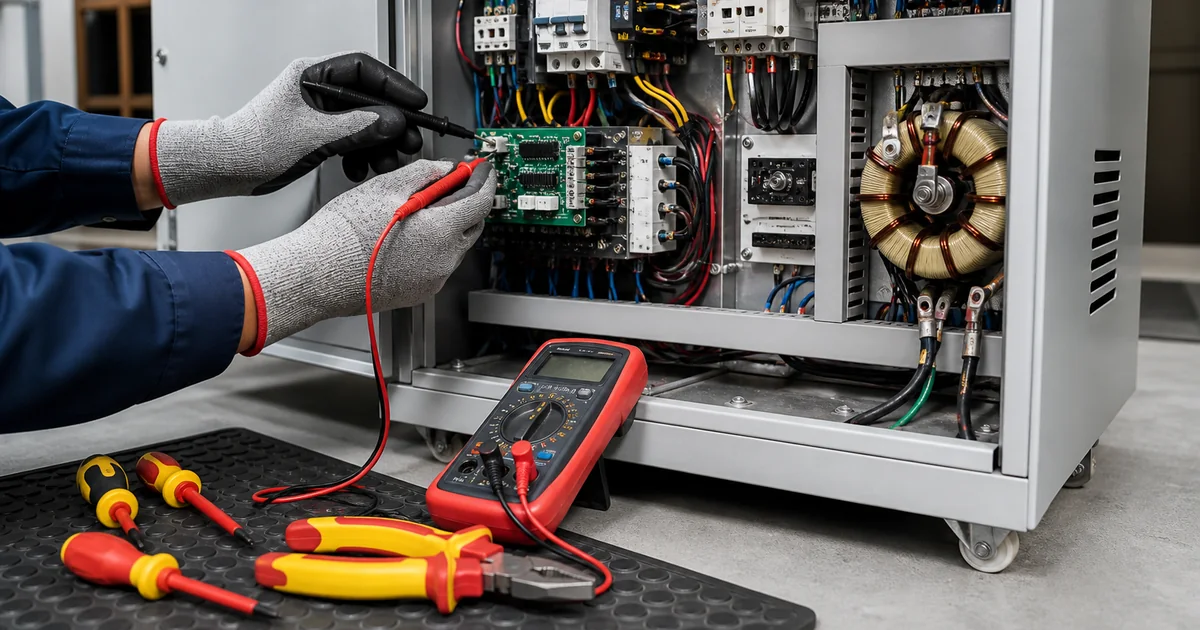
Servo Stabilizer Troubleshooting: Output Problems, Noise and Common Faults
- Published 07 Aug, 2026
- 9 min read
Unstable output, unusual noise, repeated trips and bypass alarms can have several causes. Safe troubleshooting starts with fault records and external checks before a trained engineer opens energized equipment.
Common servo stabilizer problems
Typical complaints include output outside tolerance, slow correction, repeated overload trips, contactor chatter, servo motor hunting, unusual transformer sound, heating, brush sparking and failure to transfer between regulation and bypass. Record when the symptom occurs, input and output readings, load current and alarm indication before resetting the unit.
Many apparent stabilizer faults originate elsewhere. Loose upstream connections, phase imbalance, overloaded cables, sudden machinery changes and poor earthing can affect readings. Compare measurements at the incoming panel, stabilizer terminals and protected load to narrow the cause.
Output voltage not stable
First check whether incoming voltage is within the stabilizer design range and whether load current exceeds the rating. Output may fluctuate if input changes faster than the mechanism can correct, the servo motor or control feedback is faulty, the variac brush has poor contact, or connections are loose. Incorrect sensing calibration can also create a steady offset.
Do not adjust calibration without suitable instruments and the manufacturer procedure. An incorrect setting can apply unsafe voltage to the load. If output is severely high or low, isolate sensitive equipment and call service personnel.
Unusual noise or vibration
A transformer normally produces some magnetic hum, and contactors make a brief sound when switching. New buzzing, rattling, repeated clicking or mechanical movement needs investigation. Possible causes include loose laminations or panels, unstable incoming voltage, contactor chatter, servo hunting, worn bearings and overloaded magnetic components.
Note whether noise changes with load or input voltage. Keep ventilation openings clear, but never insert tools or tighten internal parts while energized. Excessive vibration with heat or smell requires immediate controlled shutdown.
Overload, bypass and protection trips
Overload trips may result from added equipment, motor starting, low-voltage current increase, short circuits or an undersized stabilizer. Compare phase currents with the nameplate and inspect whether a new load was connected. Repeatedly resetting protection without identifying the cause can overheat components.
Bypass alarms can involve selector switches, interlocks, contactors or control power. Confirm the operating sequence from the manual. Bypass may feed unregulated voltage, so its use should be controlled and communicated to equipment operators.
When to call a service engineer
Call a qualified engineer for internal inspection, calibration, brush replacement, oil leakage, insulation concerns, burnt smell, repeated breaker operation or any fault involving exposed live parts. Provide model, rating, serial number, alarm history and measured input, output and current. This helps the service team prepare safely.
Users can perform external housekeeping and record readings, but should not bypass interlocks, increase protection settings or repair energized power circuits. Stabilizers can contain lethal voltages even after isolation.
Preventive maintenance tips
Maintain a log of input voltage, output voltage, phase currents, alarms and operating hours. Inspect ventilation, cable terminations, earthing and enclosure condition at planned intervals. Thermography and insulation tests can identify developing problems before a shutdown, when performed by competent personnel.
Review capacity whenever machinery is added. Maintenance cannot compensate for chronic overload, extreme input voltage or an unsuitable environment. Correct the system cause as well as the failed component.
Keep the service log with dates, phase readings, load current, alarms, bypass use and completed work. Compare new noise, temperature or correction time with the normal baseline rather than waiting for a shutdown. Replacement brushes, fans, contactors and control parts should match the manufacturer specification. After repair, test the stabilizer under representative load and confirm protection settings before returning critical equipment to service. Good records help an engineer distinguish intermittent supply conditions from wear or faults inside the stabilizer.
- Keep vents and filters clean
- Check for heat discoloration and loose cables
- Record brush condition and movement
- Test protection and bypass under a safe procedure
- Review load growth and phase balance
FAQs
Why is my servo stabilizer output fluctuating?
Possible causes include input outside range, overload, loose connections, sensing or control faults, servo hunting and worn variac brush contact.
Why is my stabilizer making noise?
Normal transformer hum is expected, but new buzzing, rattling or repeated clicking can indicate loose parts, overload, contactor chatter or servo movement.
What causes servo stabilizer overload?
Added load, motor starting, low input voltage, phase imbalance, short circuits or an undersized rating can cause overload.
How often should a servo stabilizer be serviced?
Intervals depend on duty, environment and correction activity. Follow the manufacturer schedule and use condition checks and operating records.
Can I repair a servo stabilizer myself?
Only trained and authorized personnel should open or repair it. Users should limit work to safe external checks and reporting symptoms.
Related Products and Solutions
Related Articles
Need help choosing the right solution?
Contact Adroit Power Systems for stabilizers, UPS systems, power quality correction, solar UPS and industrial backup power guidance.