

Solar UPS vs Normal UPS
- Published 19 Jun, 2026
- 5 min read
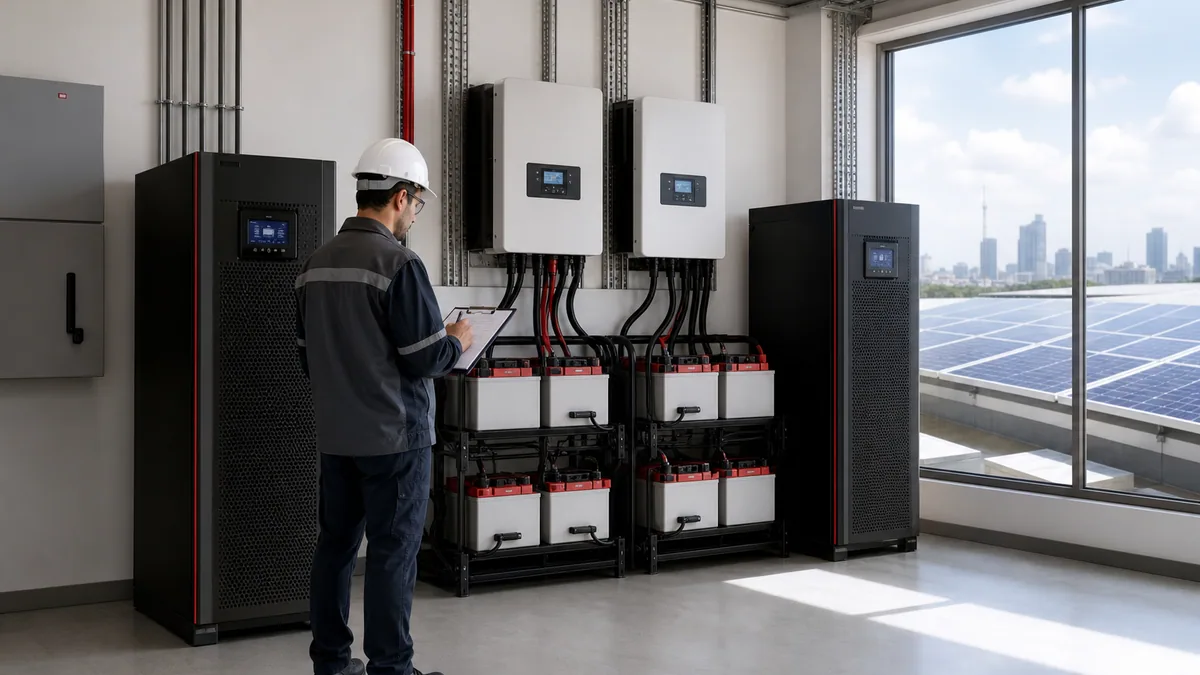
A normal UPS depends mainly on grid charging, while a solar UPS can integrate solar energy for battery charging and backup support where designed properly.
Normal UPS
A normal UPS protects critical loads from interruption and power quality issues. It charges batteries from grid supply and supports the load during outages.
Solar UPS
A solar UPS integrates solar generation with battery backup, helping reduce grid dependence where solar availability, load timing and battery design are suitable.
Selection factors
- Critical load size
- Backup duration
- Solar panel space
- Daytime versus nighttime load
- Battery chemistry
- Grid reliability and savings goal
FAQs
Can a normal UPS be converted to solar?
In some cases, yes, but compatibility, charging design, safety and warranty conditions must be checked.
Is solar UPS suitable for industries?
It can be suitable for selected loads when designed with correct solar, inverter and battery capacity.
Can a solar UPS operate when the utility grid is unavailable?
It can when designed for off-grid or hybrid operation with adequate PV, battery and inverter capacity. Grid-tied-only solar systems normally cannot provide backup.
Can solar panels charge batteries during a power outage?
Only when the system architecture supports islanded solar charging. Standard grid-tied inverters usually shut down during an outage for safety.
How is solar panel capacity selected for a solar UPS?
Size for daytime load, required battery recharge, local solar irradiance, system losses, roof area and seasonal operating conditions.
Related Products and Solutions
Related Location Solutions
Related Articles
Need help choosing the right solution?
Contact Adroit Power Systems for stabilizers, UPS systems, power quality correction, solar UPS and industrial backup power guidance.