

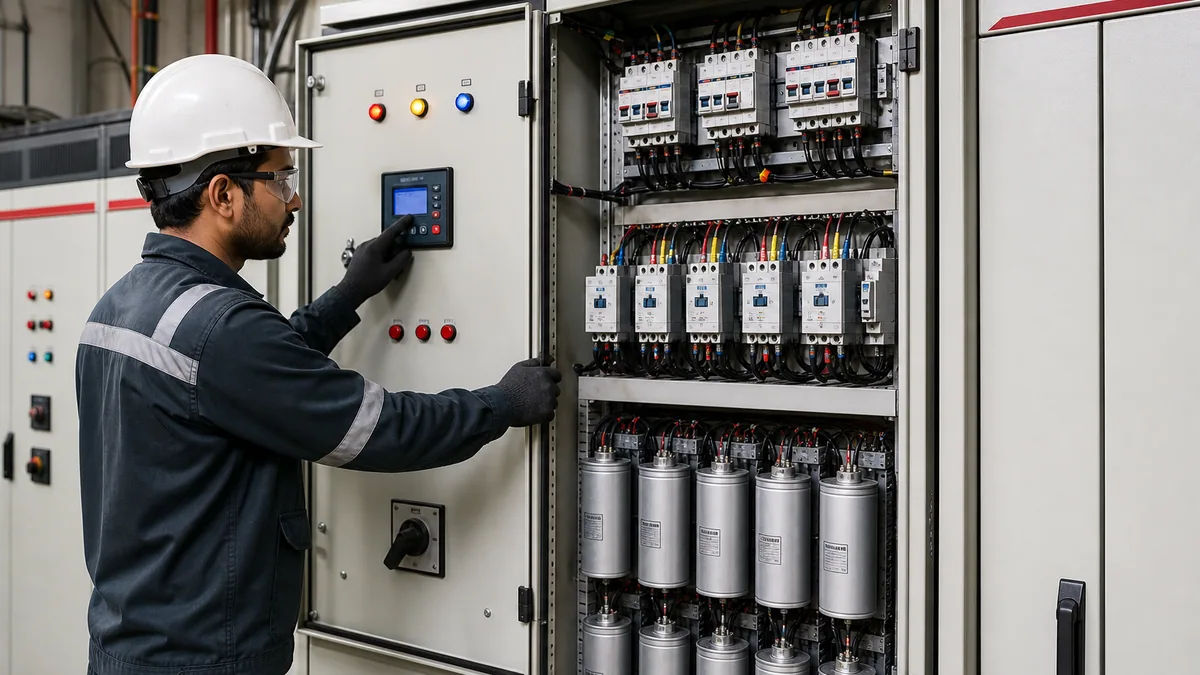
How an APFC Panel Reduces Electricity Penalties
- Published 16 Jun, 2026
- 5 min read
APFC panels automatically switch capacitor steps to improve power factor and reduce penalties caused by excessive reactive power demand.
What power factor means
Power factor shows how effectively electrical power is converted into useful work. Low power factor increases reactive demand and can attract penalties from utilities.
How APFC works
An APFC panel senses power factor and switches capacitor banks in steps to compensate reactive power. This helps maintain target power factor as plant load changes.
Important design points
- Measured load and kvar requirement
- Harmonic level before capacitor selection
- Step sizing
- Contactor or thyristor switching
- Ventilation and panel maintenance
FAQs
Can APFC reduce electricity bills?
It can reduce penalties and improve electrical efficiency where low power factor charges apply.
Can APFC be installed with harmonics?
Yes, but harmonic levels must be checked to avoid capacitor stress or resonance.
How is the required APFC panel kvar calculated?
Use measured reactive demand, load profile, target power factor, voltage and harmonic conditions rather than estimating from the electricity bill alone.
Why are detuned reactors used with APFC panels?
Detuned reactors help reduce resonance risk and capacitor stress where the electrical system contains significant harmonic distortion.
Will an APFC panel reduce electricity consumption in kWh?
Its main benefits are lower reactive penalties, current and distribution losses. It does not directly reduce the productive energy consumed by equipment.
Related Products and Solutions
Related Location Solutions
Related Articles
Need help choosing the right solution?
Contact Adroit Power Systems for stabilizers, UPS systems, power quality correction, solar UPS and industrial backup power guidance.